

If you've ever watched your dog scratch the same spot for the fifth time before breakfast, you already know the feeling. You've tried the shampoos. Maybe a different food. Possibly a supplement or two. And yet, still scratching, still licking, still uncomfortable.
The truth is, most approaches to allergy support focus on what's happening at the surface. But what if the itch isn't just a skin problem?
Emerging research into the gut-immune-skin connection is changing how we think about dog wellness, including how we support dogs through seasonal skin and allergy challenges.
Understanding that connection can make it easier to see why the right support goes beyond the skin alone.
The Gut-Immune-Skin Connection
Here's something that might surprise you: roughly 70% of your dog's immune system lives in the gut.[3]
That means the gut isn't just responsible for digestion. It plays a central role in how your dog's body recognizes and responds to the world around them, including seasonal triggers that can show up as skin irritation, itching, and coat changes.
Here's how the connection works: when gut bacteria are in balance, they produce beneficial compounds that travel through the bloodstream and help regulate immune activity throughout the body. When that balance is disrupted, the immune response can become less regulated — and for many dogs, that shows up on the skin.[4,5]
This gut-immune-skin connection has gained significant attention in both human and pet wellness research in recent years. And while every dog is different, the science is consistent enough that it's changing how seasonal allergy and skin support are being approached.
Which brings us to postbiotics and the role they can play in supporting that system.
Why Postbiotics
You've probably heard of probiotics. Prebiotics too. But postbiotics are quickly gaining attention in microbiome health, despite being studied for decades. In fact, postbiotics just received a standardized definition in 2021.[2]
Think of probiotics as seeds you plant and hope take root, and prebiotics as the water and nutrients that help them grow. Postbiotics are the harvest, the beneficial compounds already ready to go to work. No viability challenges, no guesswork.
For dogs dealing with seasonal skin and allergy challenges, that directness matters. Rather than hoping live bacteria survive manufacturing, shipping, and digestion, postbiotics get to the point.
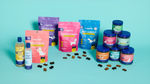
PupGrade Itch & Allergy includes a proprietary, patent-pending postbiotic that has been clinically studied in canines. It was specifically selected to support balanced immune function and a healthy gut microbiome, with the gut-immune-skin connection squarely in mind.[1]

Inside PupGrade Itch & Allergy
So what does this actually look like in practice? Here's what's in the updated Itch & Allergy formula and why each ingredient earned its place.
Immune Postbiotics
The foundation of the formula. This clinically studied postbiotic was specifically selected to support balanced immune function and gut microbiome diversity in dogs. This is the ingredient that makes the formula different, and it's the reason we felt confident enough to update it.[1]
Colostrum
A core ingredient we kept for good reason. Colostrum supports immune health and skin wellness, making it a natural complement to the postbiotics' gut-immune focus.*[6]
Wild Alaskan Salmon Oil
Wild Alaskan salmon oil supports normal skin moisture and coat shine. While the postbiotic works through the gut-immune connection, salmon oil supports what you can see and feel on the outside.[7]
Turmeric + Licorice Root
Turmeric and licorice root support overall skin comfort during seasonal changes. Together, they help round out a formula that addresses the gut-immune-skin connection at multiple points.[8,9]
Every ingredient in the formula has a specific role, creating a streamlined approach to seasonal skin, immune, and coat support.
FAQs
How does PupGrade Itch & Allergy support seasonal skin challenges?
The formula supports seasonal skin wellness through the gut-immune-skin connection. A clinically studied, proprietary postbiotic supports balanced immune function and gut microbiome diversity, while colostrum, salmon oil, turmeric, and licorice root provide complementary skin and coat support.
What are postbiotics and are they safe for dogs?
Postbiotics are beneficial compounds produced by gut bacteria. Unlike probiotics, they don't rely on live bacteria surviving digestion, making them more stable and consistent. The postbiotic in our formula is clinically studied in canines and has undergone extensive safety analysis. As always, we recommend consulting with your veterinarian before introducing any new supplement into your dog's routine.
Is PupGrade Itch & Allergy designed for seasonal allergy support?
Yes. Seasonal allergy support is the core focus of Itch & Allergy. The formula combines gut and immune support with ingredients that support skin moisture, coat shine, and overall skin comfort during seasonal changes.
How long does it take to see results?
Every dog is unique, so results may vary. In a post-launch consumer survey, 93% of dog parents reported seeing an improvement in just 4 weeks.** Around weeks 3–4, many pet parents may begin noticing changes in their pup’s skin comfort and coat condition as daily support builds.*
For best results, give daily and allow at least 8 weeks for the formula’s full support to build.
**Based on a consumer survey of PupGrade Itch & Allergy customers. Individual results may vary.
Seasonal skin challenges can show up on the surface, but meaningful daily support may need to start deeper.
By supporting the gut, immune system, skin, and coat together, PupGrade Itch & Allergy takes a more complete approach to helping dogs through seasonal changes.
If your dog has been scratching, licking, or showing signs of seasonal discomfort, this formula is designed to support the systems connected to how they feel and look each day.
Use code BLOG10 for 10% off your first order.

This content is for informational purposes only and is not intended to replace professional veterinary advice. Always consult your veterinarian before introducing new supplements or changes to your dog's routine.
*These statements have not been evaluated by the Food and Drug Administration. This product is not intended to diagnose, treat, cure, or prevent any disease.
**Based on a post-launch consumer survey of PupGrade Itch & Allergy customers.
Resources:
-
Data on file.
-
Salminen, S., Collado, M. C., Endo, A., Hill, C., Lebeer, S., Quigley, E. M. M., Sanders, M. E., Shamir, R., Swann, J. R., Szajewska, H., & Vinderola, G. (2021). The International Scientific Association of Probiotics and Prebiotics (ISAPP) consensus statement on the definition and scope of postbiotics. Nature Reviews Gastroenterology & Hepatology, 18(9), 649–667. https://doi.org/10.1038/s41575-021-00440-6
-
Paddock, Z. D., Pilla, R., Suchodolski, J. S., & Wadell, J. S. (2019). The role of the canine gut microbiome and metabolome in health and gastrointestinal disease. Frontiers in Veterinary Science, 6, 498. https://doi.org/10.3389/fvets.2019.00498
-
Trompette, A., Gollwitzer, E. S., Pattaroni, C., Lopez-Mejia, I. C., Riva, E., Pernot, J., Ubags, N., Fajas, L., Nicod, L. P., & Marsland, B. J. (2022). Gut-derived short-chain fatty acids modulate skin barrier integrity by promoting keratinocyte metabolism and differentiation. Mucosal Immunology, 15, 908–926. https://doi.org/10.1038/s41385-022-00524-9
-
Xu, Z., Huang, Z., Shen, Y., Rao, X., & Li, Q. (2022). The role of short-chain fatty acids in inflammatory skin diseases. Frontiers in Microbiology, 13, 1083432. https://doi.org/10.3389/fmicb.2022.1083432
-
Yu, P., & Satyaraj, E. (2025). Effect of bovine colostrum on canine immune health. Animals, 15(2), 185. https://doi.org/10.3390/ani15020185
-
Minamoto, Y., Otoni, C. C., Steelman, S. M., Büyükleblebici, O., Steiner, J. M., Jergens, A. E., & Suchodolski, J. S. (2021). Randomized, double-blind, placebo-controlled clinical trial measuring the effect of a dietetic food on dermatologic scoring and pruritus in dogs with atopic dermatitis. Veterinary Dermatology, 32(5), 481–e130. https://doi.org/10.1111/vde.12999
-
Dąbrowski, G., & Grabska-Liberek, I. (2023). Turmeric and curcumin — health-promoting properties in humans versus dogs. International Journal of Molecular Sciences, 24(19), 14561. https://doi.org/10.3390/ijms241914561
-
Fiore, C., Eisenhut, M., Krausse, R., Ragazzi, E., Pellati, D., Armanini, D., & Bielenberg, J. (2008). Antiviral effects of Glycyrrhiza species. Phytotherapy Research, 22(2), 141–148. https://doi.org/10.1002/ptr.2295



Comments (0)